What six months on an island teaches you about strategy
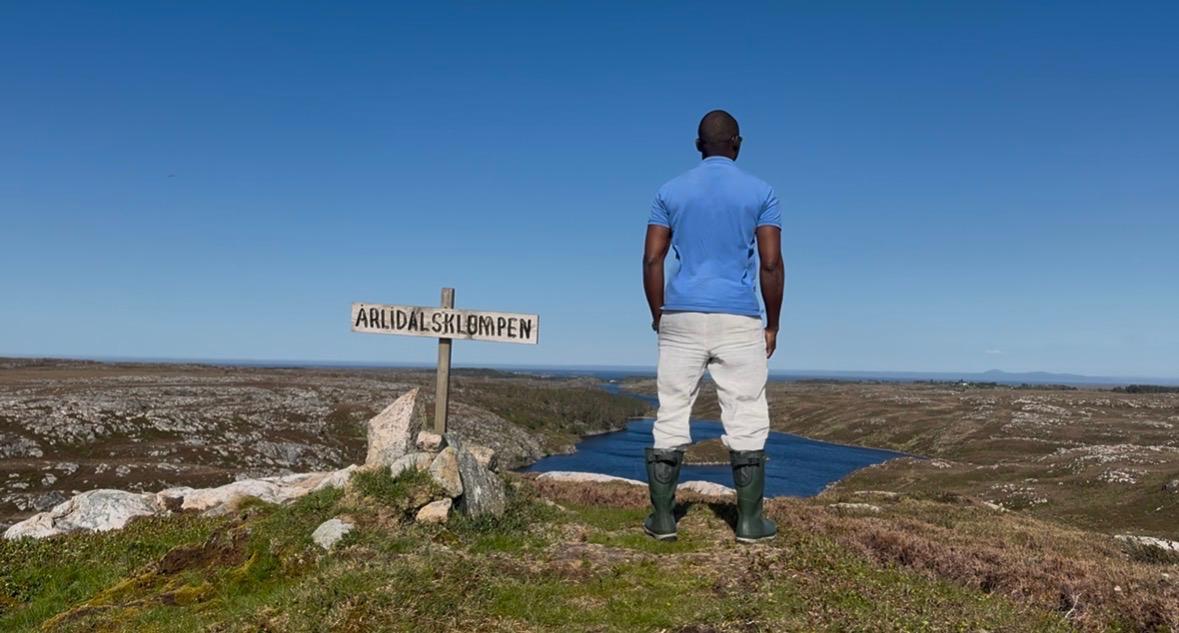
I didn't move to Frøya to escape anything.
That's the version people expect, and it's wrong. The narrative writes itself: professional leaves the city, finds peace in nature, slows down, finds himself. It's a clean arc with a tidy resolution. It's also not what happened.
I moved to Frøya because I was testing a hypothesis.
The hypothesis: that most of what passes for strategic clarity in professional life is actually just the noise of proximity. Other people's urgency. The ambient hum of cities that makes restlessness feel like momentum. The social gravity of being near things, which can be confused for being part of things.
Remove the city. What's left?
The compression effect
The first thing you notice on an island is that every interaction has weight. There's no infinite supply of new people, new venues, new stimulation. The same faces on the ferry. The same roads. The same weather patterns you start to read without thinking about it.
This sounds like limitation. It isn't. It's compression.
In cities, the abundance of option creates a kind of strategic laziness. You don't have to commit to anything because there's always another option, another meeting, another version of the plan. The cost of indecision is low because the environment absorbs it.
On Frøya, indecision has a different cost. The meeting that doesn't happen this week won't happen next week either, unless you make it happen. The relationship you don't invest in doesn't get replaced by a better one from a networking event. The work you don't do today sits exactly where you left it.
This is clarifying in a way that's hard to get in any other environment. You stop performing strategy and start doing it.
What the winter showed
I moved here in November. That matters, because November on Frøya is not a gentle introduction.
Extreme wind, daily. Darkness for most of the day. Average temperatures between minus ten and minus fifteen. The kind of conditions where the local culture, reasonably, stays inside.
I kept the same routine I had before. Same wake time. Same distances. Hiking in the dark before most people were out of bed.
People started to notice. Then they started to talk about it. Someone would mention seeing me out in conditions they would not walk a dog in. The story got passed along. Someone called it a legend. Not in a flattering, constructed way. More like: genuine puzzlement that someone would do that, consistently, when they had no obligation to.
For me it was just another day.
That is the whole point.
The Lion Ethos framework is built around consistency across conditions. Not because suffering in bad weather is virtuous. But because when you hold the same behaviour across varying conditions, two things happen. First, you learn your actual capacity rather than your conditional capacity. Second, the standard stops being situational. Wednesday in a storm becomes the same as Wednesday in July. The season stops being a variable.
The result: what I was doing in winter, which took significant mental and physical preparation when I arrived, now takes close to zero effort. The same hike in warm weather, with light for most of the day, is not an event. It is not even a decision. It is just what happens.
Yesterday
I went fishing yesterday morning. Afterwards, walking back, I decided to keep going.
Frøya has two trails I had not done: the hardest routes, leading to the highest points on the island. Seven hours later I was on the way back down. At the summit there is a Norwegian Tourist booklet, the kind placed there for anyone willing to make the climb. I wrote my name in it.
Murphy Alex. Was here.
I did not plan it the night before. I did not train specifically for it. I did not treat it as an occasion. I went fishing, kept walking, and the mountain was there.
That is what consistent behaviour across all seasons produces. The summit was not the challenge. The challenge was the first week in November, in the dark and the cold, deciding whether the routine held or whether conditions were an acceptable reason to modify it.
They weren't. The routine held. And everything after that became progressively easier, until a seven-hour climb on a whim feels like a normal Sunday.
What building looks like without the backdrop
I run IPRESTANDA from here. AI consulting for Norwegian businesses, primarily in the north. Aquaculture, professional services, local operations. The work is technical and specific and requires trust before anything else moves.
Building that trust from Frøya is a different exercise than building it from an office in a capital city. There's no institutional backdrop. No prestigious address, no logo on a tower, no ambient signal of credibility that geography lends you.
What you have instead is presence. Actual presence. You're here. You chose this. The businesses I work with can see that. It means something different than flying in from Oslo.
I didn't plan this dynamic when I moved. It's one of several things the island taught me.
The things you find out when there's no city to hide in
Cities are excellent hiding places. Not in any dramatic sense. But the density of activity means you're always doing something, which can be confused with making progress. Full diary, constant motion, always on your way somewhere. It feels like traction.
Strip that away and the question becomes simple: what do you actually produce?
Not what meetings did you attend. Not what conversations are you in. What did you make, decide, complete, move forward? The island holds you to this in a way that is uncomfortable at first and then becomes the thing you value most.
My output went up in the half year I have been on Frøya. Not because I was working more hours. Because I stopped using busyness as a proxy for progress.
The strategic principle under all of it
If I had to extract one thing from six months here: the quality of your environment determines the quality of your thinking, and most people radically underestimate this.
Not because quiet is magical. Not because islands are better than cities. But because the deliberate removal of ambient noise, social pressure, and optionality forces you to be honest about what you're actually building and whether the daily decisions connect to it.
That honesty is the strategy. Everything else is commentary.
The differentiator is not the season or the conditions or the occasion. It is what you consciously choose to do with the same day, repeated. The summit was not special. The seven months of doing the same things in conditions that made them hard is what made it feel like nothing at all.
That is the whole point.
Murphy Alex builds operational AI systems for Norwegian SMEs from Frøya, Trøndelag. IPRESTANDA is at iprestanda.com.