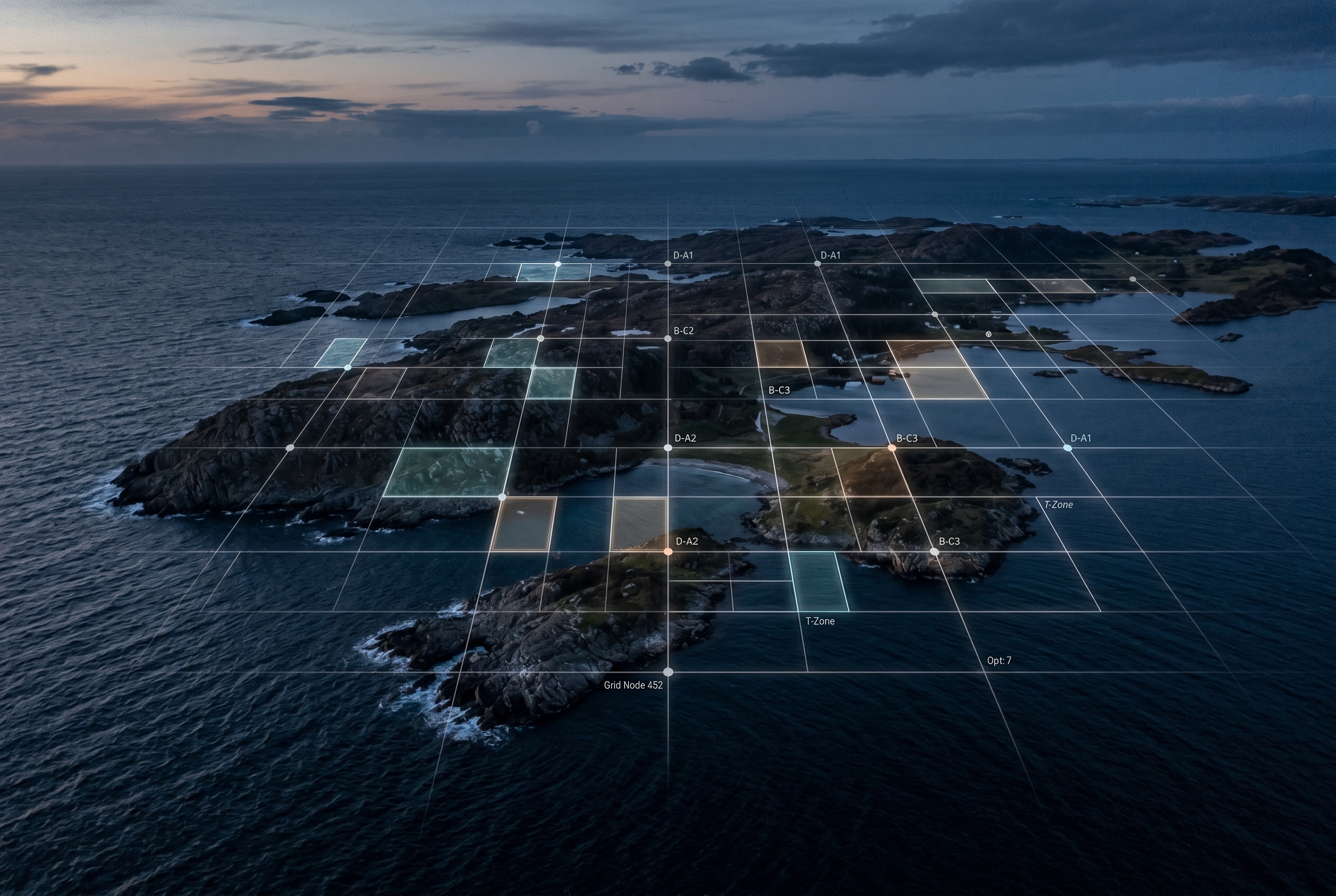
Why I chose Frøya: the operating decision
People hear that I run an AI company from Frøya and they assume I must have arrived here sideways. A lifestyle choice. Something romantic about island living and the North Atlantic. An unlikely place to land.
The story is not like that.
Years of building, then a move in November 2025 to a small island off the coast of Trøndelag with about 5,000 people, serious weather, and one of the most productive maritime economies in Europe. That move was not a reset. It was a deployment decision. There is a real difference between the two.
What the formation period built
The formation period was long. I built a framework, tested it, refined it, found out where it held and where it did not. I found very few people in those years who were thinking along the same lines. That is an honest observation. The work I was building needed a different kind of market to land in.
The Lion Ethos came together in that period. The operational discipline. The understanding of how compounding works across years, not quarters. The conviction that small businesses do not fail because of bad intentions. They fail because they build systems that depend entirely on the people inside them, and then run out of capacity.
By 2025, after years of building and refining, the framework was ready. The question became: where does it belong?
Why Frøya
Frøya is the aquaculture capital of Norway. Salmon farming, shellfish, fishing logistics, cold chain transport. The businesses here move product in and out of some of the most demanding conditions in the world. They are real operations with real constraints. They are not building apps. They are keeping things running.
Trøndelag more broadly is a region of manufacturers, contractors, logistics operators, food producers, and maritime service businesses. These are the kinds of companies that have spent decades doing things well without technology intervention, and are now at the point where the cost of staying manual is starting to compound against them. Not in a theoretical way. In a very practical way: staffing costs, documentation requirements, traceability obligations, reporting overhead.
These businesses do not need a digital transformation pitch from someone who flew in to run a workshop. They need a long-term operator who understands their problems well enough to build systems that actually fit into how they work. That is a different proposition entirely, and it is only credible if you are here, consistently, building with them over time.
I am here. That is not a positioning line. It is just what I chose.
The operating logic
When I think about the arc from the UK through years of building to this island, I do not see a wandering path. I see a formation sequence.
The formation is British. London is where most of my professional life was built: the acumen, the execution standards, the discipline of working in an environment where ambiguity is not tolerated. The academic grounding came through UK universities (Brighton, Leicester, Newcastle): software engineering at undergraduate level, signal processing and communications at postgraduate level. These are not soft disciplines. They teach you to think in systems, to care about what actually works rather than what sounds good in a meeting.
The formation period gave me the time to develop the framework without the noise that might have derailed it earlier.
Norway is the deployment. Frøya is the specific address where that deployment makes the most sense, because the market here is real, the problems are concrete, and there is genuine work to be done.
That is not a story about escaping something. It is a story about arriving where the work belongs.
What this means in practice
The businesses I work with in Frøndelag are not complicated in the way that startup ecosystems sometimes are. They want processes that run cleanly. They want documentation that does not consume three hours every week. They want to know when a supplier is late before it becomes a crisis. They want their people doing skilled work, not manual reporting.
That is what Norwegian SMEs should automate first: the recurring, rule-governed tasks that sit between people and the work they were actually hired to do.
The resistance is real too. Many of these businesses are watching and waiting. There is a cautious instinct in Norwegian business culture that is not irrational. It comes from having built something that works and not wanting to break it in exchange for a promise. The problem is that the window for careful, deliberate adoption is shorter than it looks. Norwegian SMEs waiting for someone else to go first are not being prudent. They are letting the gap widen on someone else's timeline.
I understand that instinct. I just do not share it.
The work landing
There is a moment in any serious project where the preparation period ends and the actual work begins. Not because the preparation was complete in some ideal sense, but because you reach a point where continuing to prepare inside conditions that do not match the target is just delay.
I had built enough. The framework was solid. The operating discipline was real. What I needed was the right environment, the right clients, and a market with genuine need. Very few people were willing to do the work at the level it required.
Frøya is a small island. The winters are long. The logistics are real. The work is right here.
That is not an unlikely place to build from. It is exactly the right one.
Murphy Alex builds operational AI systems for Norwegian SMEs from Frøya, Trøndelag. IPRESTANDA is at iprestanda.com.