At 5am the streets were empty. I was already at the gym. Outside, nothing moved. No flags yet. No noise. Just the dark and the cold and the particular quiet of an island before a national holiday begins.
That is not a 17. mai story. That is just what the morning looked like.
Inherited versus chosen
Most people in the procession today grew up here. They know the songs. Their parents walked this same route. The flags are not symbolic to them in the way a symbol requires distance to function. The flags are just part of the day, which is part of being Norwegian, which is simply what they are.
I am Nigerian and British. I moved here six months ago. I chose Frøya specifically, not Oslo, not a city, not somewhere with infrastructure that would soften the adjustment. The reasoning behind that decision is documented elsewhere: why I chose Frøya was an operating decision, not a lifestyle choice. But what that decision means on a day like today is something different.
I walked the full procession in Sistranda. Not from the pavement as a spectator, but inside the line, for the whole length. There is a difference between watching a tradition and being present inside it. I chose the latter. Frøya is where I live. That seemed like the right call.
That is about as much as you should want.
What belonging actually requires
There is a version of this essay that celebrates integration, that makes a point of how well a person adapted, that uses the national day as evidence of something. I am not interested in writing that.
What I observed today is simpler: belonging in a chosen place requires showing up without making it about yourself. You attend. You are present. You do not perform enthusiasm, but you do not hold yourself at ironic distance either. You read the room. You leave before the family buffet, because that part is not yours, and knowing that is part of the respect.
This is not different from what accountability without a scoreboard actually means. You do not get credit for showing up correctly. You just show up correctly.
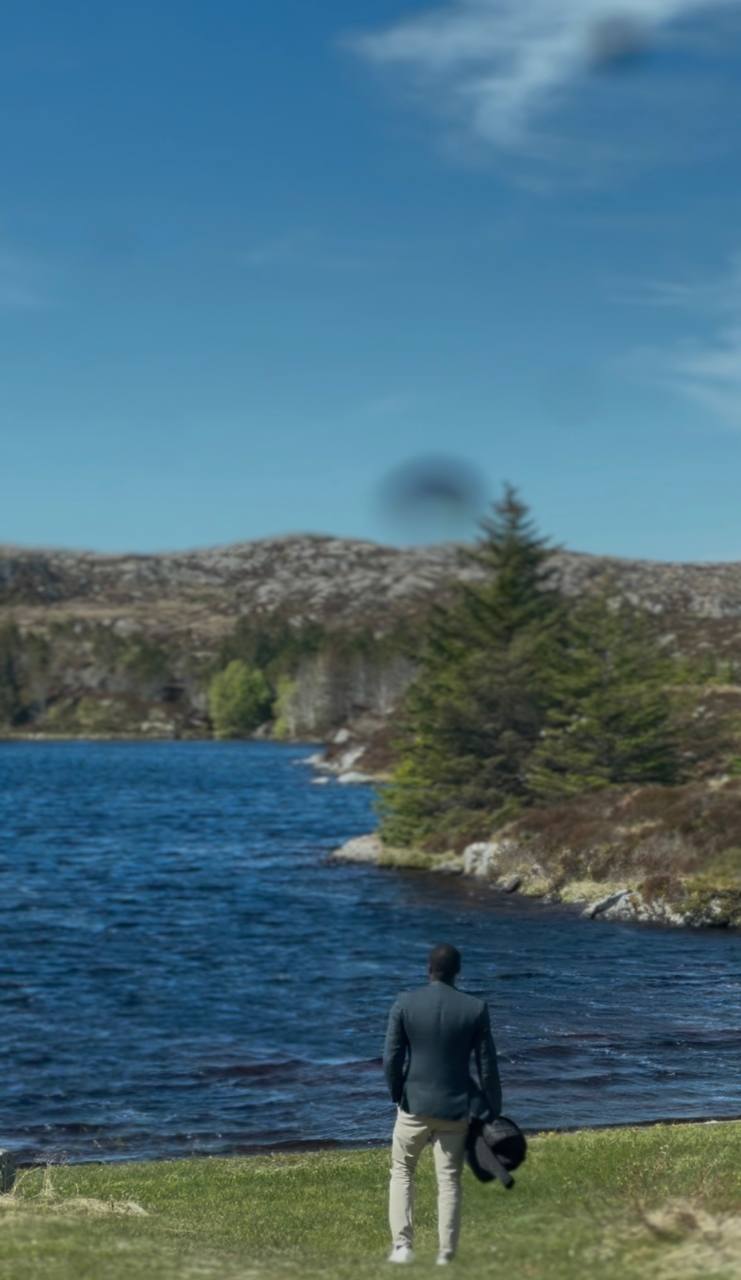
After the procession I went to a lake. The water was cold. Then up into the highlands, rocky ground, wind turbines on the ridge, boulders the size of cars scattered by something that happened long before anyone was naming these islands. Strong wind. Nobody else up there.
That is also 17. mai. Not the version you see in photographs, but the version that exists when the procession is done.
What compounding has to do with it
Six months is not long. I do not know this place yet. But I know some things I did not know in November: which roads ice over, where the fish come in, who nods back when you nod, what the light does in late winter before it starts to return.
That knowledge compounds. Not in a way you can point to on any given day. But in the way that compound effects become visible only in retrospect, the accumulation of small correct decisions, showing up, staying, paying attention, eventually becomes something you can stand on.
Choosing a place means deciding to let it matter. That commitment is not proven once. It is proven repeatedly, in low-stakes moments that nobody is watching, over a longer period than feels comfortable to commit to in advance.
What this looks like in practice
You train before the flags go up. You walk in the procession without making it about your presence in it. You stay long enough to be genuinely there, and you leave before you overstay. You go to the lake afterward because the day is not finished when the formal part ends.
None of this is spectacular. That is the point. Belonging in a place you chose rather than inherited is not a story of dramatic integration. It is a series of ordinary days in which you consistently behave as though you are going to be here for a long time.
Because you are.
Murphy Alex lives and works on Frøya, an island municipality in Trøndelag, Norway.